
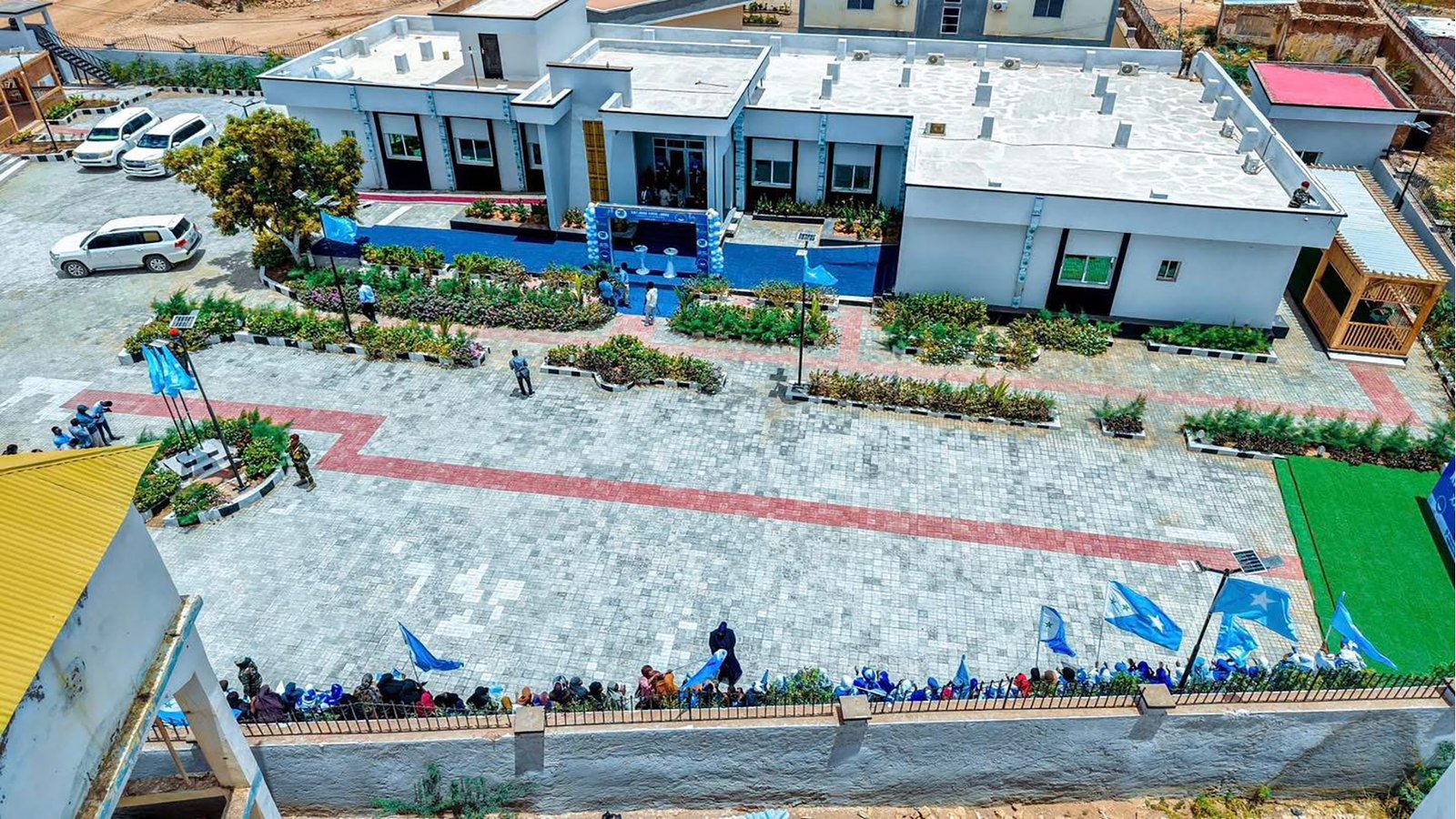
HISTORY OF DHUUSAMAREEB
The historical roots of Dhuusamareeb date back to the 1890s, when early communities first settled near its vital water sources and grazing lands. Between 1925 and 1935, a permanent town emerged, establishing itself as a central hub for trade, livestock, and resource distribution for nomadic populations across central Somalia. During the Italian colonial period (1884–1959), Dhuusamareeb served as a strategic regional center for transport, communication, and emergency support, leading to its official recognition as a district in 1954 under the Italian Trusteeship Administration (AFIS).

 Economic Hub
 Capital Governance
Dhuusamareeb’s administrative role expanded significantly in 1973 when the central government designated it as the capital city of the Galgaduud Region, coordinating trade, public administration, and local development across surrounding districts. A major milestone in its modern history occurred in June 2015, when Dhuusamareeb became the official capital city of Galmudug State uniting 11 local clans and establishing core governance institutions, including the State Presidency and Parliament. From 2022 onward, the local council and district administration have continued to strengthen local governance, service delivery, and sustainable development across the district.
Key Historical Milestones
VISION, MISSION & CORE VALUES
To transform Dhuusamareeb into a resilient, inclusive, and sustainable city that advances stability, prosperity, innovation, and improved quality of life for all communities.
To achieve sustainable urban development through effective governance, strategic partnerships, accountable leadership, and the delivery of quality public services and infrastructure.
Core Organizational Pillars
Accountability
Pledging complete transparency in civic operations, procurement, and public asset management.
Inclusivity
Ensuring equal civic access and political representation for youth, women, and IDP communities.
Innovation
Deploying modern e-governance tools to streamline, automate, and secure municipal transactions.
FIVE STRATEGIC PILLARS
The local municipal administration operates under five overarching strategic pillars designed to guide urban policy, budget allocation, public infrastructure investment, and sustainable development:
GOVERNANCE & SOCIAL SERVICES
Strengthening local governance systems, public administration, civic participation, and equitable access to essential social services.
ECONOMIC & INFRASTRUCTURE DEV.
Promoting trade investment, rehabilitating urban road networks, and driving opportunities for sustainable local business growth.
JUSTICE, LAW, AND ORDER
Enhancing public safety, strengthening neighborhood dispute resolution mechanisms, and promoting civic peace across all districts.
HUMAN RESOURCE CAPACITY
Building institutional capacity within public offices, training municipal staff, and empowering youth and marginalized groups.
CLIMATE RESILIENCE & SOCIAL INCLUSION
Mainstreaming environmental conservation, climate adaptation, renewable energy adoption, and dignified integration support for internally displaced persons (IDPs).